
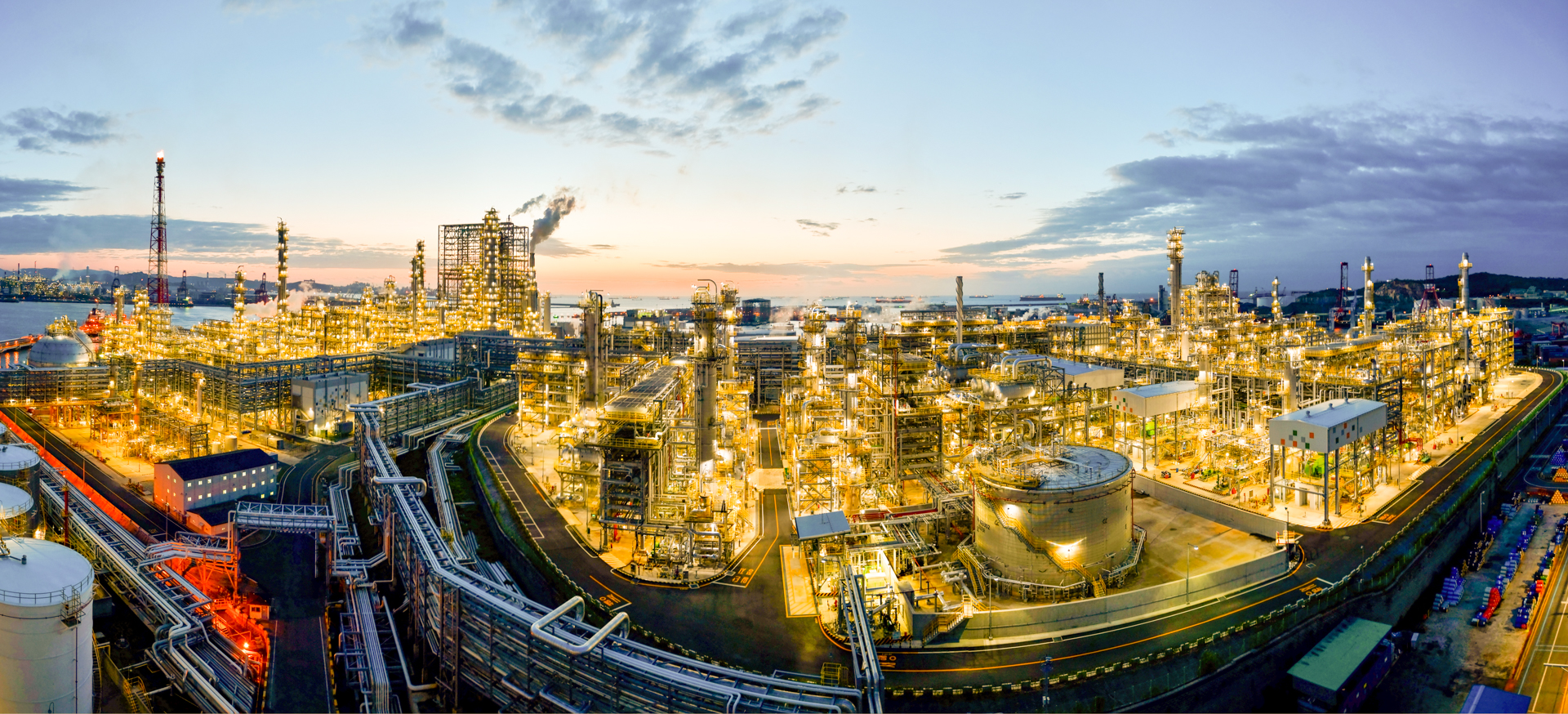
Yesterday, S-OIL said it will contribute to making Korea’s petrochemical industry more competitive through ‘Shaheen Project’ under construction in Ulsan and targeting commercial operation in 2027.
Shaheen Project is a 9+ trillion Won mega petrochemical project converting crude oil into such basic chemicals as ethylene and propylene. It will be the first to commercially apply new technology(TC2C) that converts low value byproducts into petrochemical feedstock. The new facilities will also be able to cut carbon emissions by more than 20% via waste heat recovery process.
What also differentiates Shaheen Project is its ability to flexibly change feedstock, which will be helpful especially since geopolitical risk in the Middle East is adding volatility to naphtha supply. This will enable S-OIL to flexibly respond to supply chain shocks and changes in feedstock price.
New productions will be directly supplied to petrochemical neighbors in Ulsan via pipeline and help petrochemical downstream players replace their import requirement.
S-OIL emphasized the importance of Shaheen Project by noting that major facilities expansion in China and the Middle East has heated up global supply competitiveness and the only way to survive in the market is to secure cost advantage.
Meanwhile, voices to expedite petrochemical restructuring aimed at shedding overproduction and shift to high value ‘specialty’ products are growing. It is gaining speed in Daesan and Yeosu but there is little progress in Ulsan due to conflict of interests among companies in the city. One market insider said it’s hard to push restructuring because of complex conflict of interest. He went on to say that the government needs to convince businesses. Restructuring itself could even be disrupted if Shaheen Project starts up before overproduction issue is cleared.
Market conditions are not helping, either. Ethylene spread sank to $100 level per ton in Q3, which is far short of $250/ton in breakeven point.